Introduction
You have the eCommerce business. Your products are great. Your prices are right.
But if your eCommerce business fails to perform, none of it matters.
Every lost click, every delayed page loading, and every confusing step has an impact on your revenue. Australian buyers don’t wait. They move fast. They expect you to have smooth navigation, secure payment options, and a shopping experience that feels effortless.
This is why eCommerce needs a mobile app and strong web development. A reliable website builds trust from the very first click. A mobile app for eCommerce business keeps customers coming back with speed, convenience, and personalised engagement. The web and mobile app development company in Australia can help you turn visitors into buyers and buyers into loyal customers.
In Australia’s competitive online market, the platform experience can decide the success or failure of your eCommerce business. If your store matches the expectations of the local shopper, then your store not only survives but also grows. Now is the best time to have a better online presence.
To have proper growth, we have prepared this guide for you, which will cover why eCommerce business need a mobile app, an eCommerce business need app development, and a web solution. Also, this guide will cover what to perform better and support long-term growth.
Why Ecommerce Businesses Are Growing Across Australia
eCommerce business in Australia is expanding rapidly. Businesses are now moving more towards the online platform to meet the modern shopper’s expectations. The technology and changing habits are shaping how Australians buy online.
Let’s look at how..
How Buyer Behavior Shaped Online Shopping in Australia
- Australian customers now prefer more convenience and speed of the platform when it comes to shopping.
- Mobile devices are more commonly used for browsing, comparing, and purchasing, which highlights the need for a mobile app for eCommerce business.
- Many buyers look for reviews and ratings before making any purchase decision.
- Personalization drives loyalty, and shoppers will respond positively to recommendations and custom offers.
- Integration of online payment systems such as PayPal and buy-now-pay-later options also influences purchasing decisions.
Insight: Understanding these behaviors helps eCommerce businesses create a smoother shopping experience and reduce the chances of cart abandonment.
What Local Sellers Need to Match Customer Expectations
-
-
- Fast and Reliable Platforms: Shoppers leave slow or poorly performing sites. eCommerce business need web development in Australia to meet these expectations.
- Clear Navigation and Product Information: Easy-to-read pages and visible product details to improve the chances of conversion.
- Multiple Payment Options: PayPal, Credit cards, and local payment methods build trust.
- Mobile-Friendly Experience: Many Australians primarily shop on mobile devices, which is the reason why eCommerce needs a mobile app for success.
- Personalised Engagement: Loyalty programs, recommendations, and push notifications increase the chances of repeat sales.
-
Australian eCommerce growth is driven by the shopper behavior, technology adoption, and convenience expectations. Local sellers who implement a mobile app for eCommerce business and web development solutions can reach more buyers, increase sales, and stay competitive.

Why eCommerce Businesses Need a Mobile App
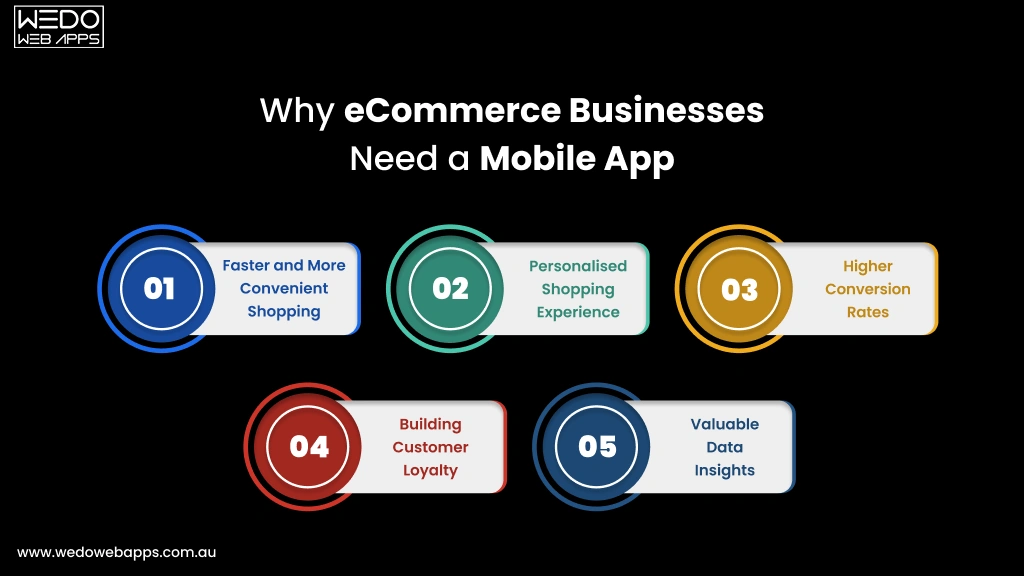
In Australia, most of the shoppers use mobile devices to browse and buy products. A website alone is no longer enough to increase sales. This is why eCommerce businesses need a mobile app.
Let’s look at what is covered in eCommerce mobile apps:
1. Faster and More Convenient Shopping
- Mobile apps allow customers to browse and purchase quickly.
- Shoppers can now easily save their favourite products, addresses, and payment information for faster checkout.
- Offering convenience encourages repeat purchase and maintains loyalty.
2. Personalised Shopping Experience
- Apps can show product recommendations based on the browsing and history of purchase.
- Push notifications keep customers informed about the offers and new arrivals.
- Personalisation increases the chances of engagement and boosts sales.
3. Higher Conversion Rates
- Mobile apps provide smoother navigation than websites.
- Easier checkout reduces abandoned carts.
- Apps often lead to higher average order values compared to mobile and web.
4. Building Customer Loyalty
- Loyalty programs can be directly added to the app.
- Exclusive deals and notification encourages customers to return.
- Regular engagement builds a strong relationship with the buyers.
5. Valuable Data Insights
- Apps collect data on user behavior, preferences, and purchase patterns.
- Businesses can make informed decisions on marketing, inventory, and promotions.
- Data-driven strategies help in improving the overall business performance.
For many Australian eCommerce businesses, a mobile app for eCommerce is the best option to achieve growth. It improves the convenience, personalisation, sales, and customer loyalty. Investing in why eCommerce needs a mobile app services in Australia to make sure your business meets the modern shopper’s expectations and stays ahead of the competitors.
Why an eCommerce Business Needs Web Development Support
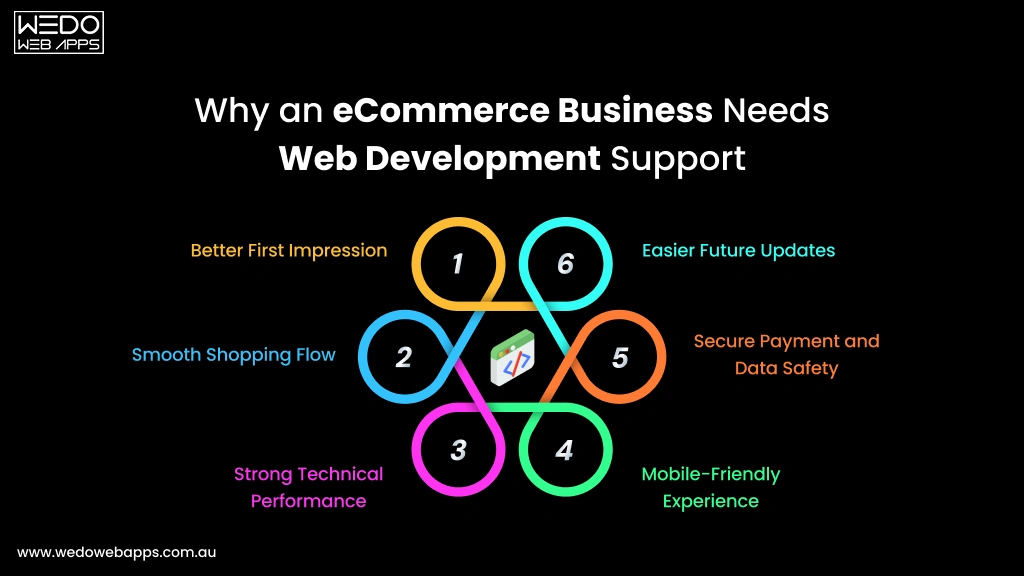
A strong website is important for any online store. It develops how Australian shoppers view your brand and how easily they can make a purchase. This is why an eCommerce business need web development support that covers design, performance, and long-term stability.
1. Better First Impression
- Clear layouts help visitors to easily understand your store more quickly.
- Fast-loading pages keep buyers from leaving early from your store.
- A polished design builds trust from the first click.
2. Smooth Shopping Flow
- A guided path from product view to payment reduces the confusion.
- Fewer steps in the process help lower cart abandonment.
- A smooth flow improves the chances of completing the sales.
3. Strong Technical Performance
- Professional development improves speed and stability
- Clean code reduces the chances of errors and downtime.
- Better performance supports better traffic spikes during promotions or holidays.
4. Mobile-Friendly Experience
- Many Australian shoppers browse through their mobile devices.
- A responsive website adjusts to different screen types.
- This creates a more comfortable shopping experience.
5. Secure Payment and Data Safety
- Buyers expect to have reliable payment options.
- Security layers protect personal and financial information.
- Safe transactions build long-term confidence.
6. Easier Future Updates
- A well-built site is simpler to update and expand.
- A new feature can be added without breaking the system.
- This supports your growth as you scale your eCommerce business.
These updates allow a more supportive appearance of the eCommerce store.
How a Strong Website Supports Search Visibility and Traffic Stability
Search engines reward the website that loads fast, offers clear information, and provides a stable experience. A good development has a direct impact on these factors:
- Clean code helps improve the appearance of search engines.
- Faster loading boosts the ranking and reduces the bounce rates.
- Stable performance keeps your traffic consistent during the high-demand periods.
Good web development becomes the base of search visibility. When a site is easy for Google to read and fast for the user to navigate, your store directly receives more organic views without any extra cost.
Why Product Pages and Checkout Structure Matter
Product pages and checkout steps have an influence on both sales and customer trust.
Product Pages
- Clear title and clean images help the buyer feel more confident.
- A short description with the right details guides the decisions.
- Well-organised sections help to reduce the confusion and support higher conversions.
Checkout Structure
- A simple step to reduce the drop-offs.
- The auto-fill option saves time for returning shoppers.
- Clear payment options increase comfort and trust.
Strong product pages paired with a smooth checkout process create a complete shopping experience. This is another reason an eCommerce business need web development that focuses on clarity and ease of use.

Mobile App for eCommerce Business: Key Advantages
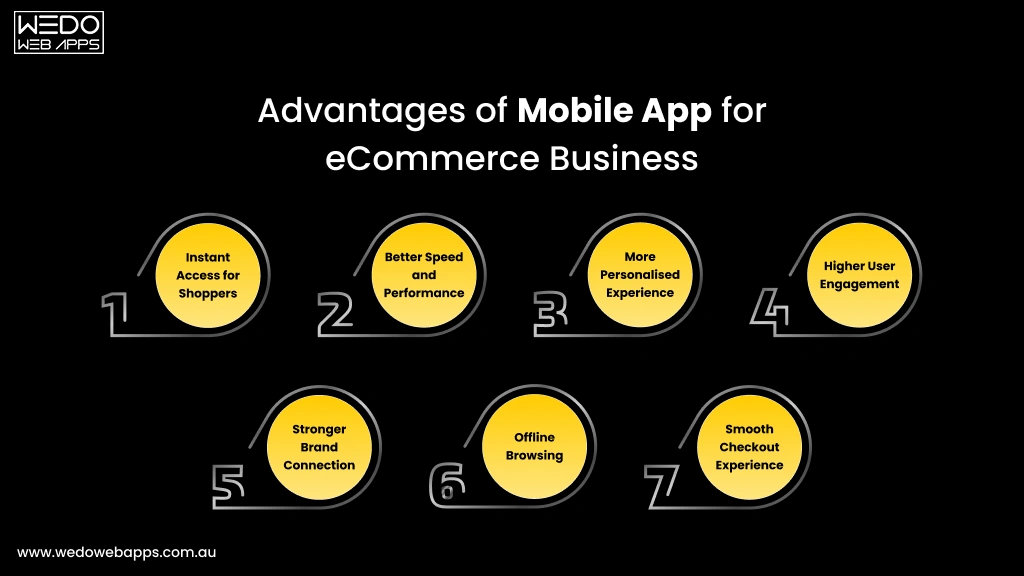
A mobile app for eCommerce business gives your customers a faster and more focused way to shop with your store. Australian buyers prefer to have quick access, smooth navigation, and features that make every purchase simple. An app delivers all of this with better control and higher engagement.
The benefits of a mobile app for eCommerce business include:
1. Instant Access for Shoppers
- The customer can open the app with one click.
- There is no need to search for the website each time.
- Faster entry encourages more frequent visits.
2. Better Speed and Performance
- Apps load faster than mobile websites.
- Smooth interaction keeps the shoppers more engaged.
- A fast experience increases the chances of completing the order.
3. More Personalised Experience
- Apps can now show product suggestions based on user activity.
- Buyers receive notifications about the offers and new arrivals.
- Personalisation helps to increase the chances of repeated sales.
4. Higher User Engagement
- App icons serve as a constant reminder of the store.
- Exclusive app not only deals better but also attracts regular visitors.
- Engagement features improve customer loyalty.
5. Stronger Brand Connection
- An app creates a dedicated space for your store on every device.
- Consistent branding builds better recognition.
- A familiar environment helps shoppers feel more comfortable.
6. Offline Browsing
- Some features work even without full internet access.
- Customers can check on saved products or previous orders.
- This adds extra convenience and improves user satisfaction.
7. Smooth Checkout Experience
- Saved addresses and payment details speed up the process.
- Faster checkout reduces the chances of cart abandonment.
- This adds extra convenience and improves user satisfaction.
These are the benefits of the mobile apps for eCommerce business. By having the mobile app, you can easily keep the user engaged with faster loading and fewer distractions.
eCommerce Business Need App Development: What It Means for Growth
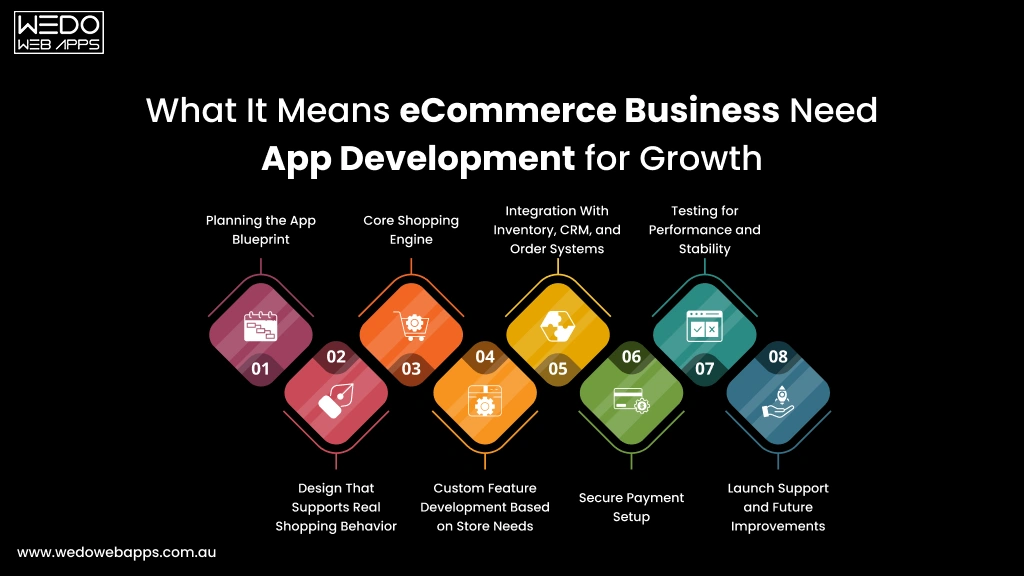
When an eCommerce business need app development, then you must understand what the full process of development covers. The best app developer in Australia builds more than shopping tools. It creates a system that supports growth, customer loyalty, and day-to-day operations.
Here, you will understand what you receive when investing in a mobile app for eCommerce business, especially when they want clarity before starting.
1. Planning the App Blueprint
By planning the app, you need to have the proper structure of the project. These stages answer one of the most common questions, which is why eCommerce needs a mobile app.
- The user path is mapped from entry to smooth checkout.
- Features are arranged based on what shoppers use most.
- Screens are planned to keep the flow simple and consistent.
Good planning is essential when an eCommerce business need web development and app development together. Both platforms must support the same shopping goals.
2. Design That Supports Real Shopping Behavior
Design affects how quickly the user understands the store.
- Product cards are organised for quick reading.
- Menus and buttons are placed for smooth navigation.
- Colours, spacing, and typography guide buyers to browse effortlessly.
A clear design answers the concern behind why eCommerce businesses often see drop-offs. A comfortable layout keeps the shopper engaged and reduces the friction.
3. Core Shopping Engine
A strong engine supports all shop functions. Core shopping engine includes:
- Product categories
- Search and filters
- Cart
- Checkout
- Order status
- Saved details
These features must load fast. Slow performance is one of the main reasons why eCommerce needs a mobile app because apps usually respond faster than mobile web pages.
4. Custom Feature Development Based on Store Needs
Custom features help your store stand out in the Australian market. Features such as:
- Subscription systems
- Product bundles
- Loyalty features
- Advanced variations
- Quick reorder tools
These additions support long-term growth and fit your business model. They help your app deliver what your website may not, which strengthens an eCommerce business that needs app development as part of its future planning.
5. Integration With Inventory, CRM, and Order Systems
A well-integrated app reduces the chances of errors and manages the workload.
- Stock levels are updated instantly.
- Order records sync with your order panel.
- Customer profiles stay connected to your CRM.
- Marketing lists refresh automatically.
Smooth integration gives the benefit of development in a mobile app for eCommerce business, because it keeps your entire system in sync without putting any manual input.
6. Secure Payment Setup
Within the app, the payment must be simple and more trusted. Payment options such as:
- Cards
- Wallets
- Bank Transfer
- Buy now, pay later option (popular in Australia)
A secure checkout gives support to have more conversions and answers common questions related to security. A trusted payment option builds confidence.
7. Testing for Performance and Stability
Before launching the app, it is important to have a secure checkout, and the app goes through structured checks. Test for:
- Speed of the app
- Security scans
- Cross-device compatibility
- Bug fixing
- Load management tests
These checks will make sure that your app stays stable even in the peak traffic hours and handles it effectively. This stage is equally important for businesses where eCommerce businesses need web development and app development to work together.
8. Launch Support and Future Improvements
After release, it is important to keep updating the app for better performance.
- Monitor issues
- Add new features
- Improve user flow
- Adjust to customer behaviour
The app must grow as your business grows. This long-term support is one of the important reasons why eCommerce needs a mobile app alongside a strong website.

Core Features That Improve an eCommerce Website and App
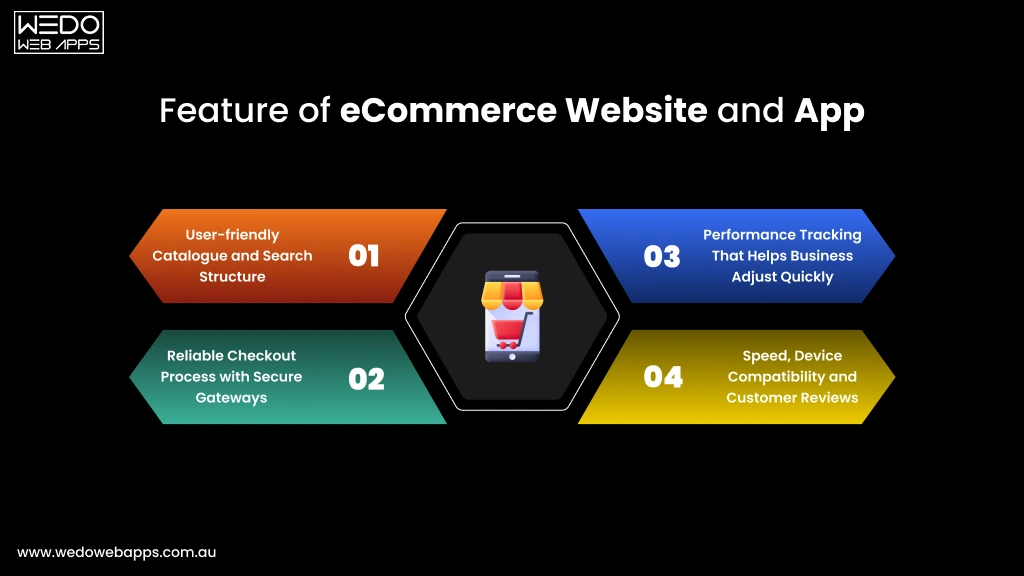
A strong eCommerce setup depends on how well the store is prepared for both web vs mobile development in Australia Functionality, checkout flow, speed, tracking accuracy, and device compatibility shape the overall shopping experience.
These features discussed here help an eCommerce business keep buyers engaged and ready to complete their order.
User-friendly Catalogue and Search Structure
A good product catalogue helps shoppers move through the items without confusion.
Key elements that support this include:
- Clear product groups that match customer expectations.
- Filter for price, size, color, material, and brand.
- A search function with auto-suggestion to reduce time for product hunting.
- Well-arranged product pages with visible pricing, delivery details, and return information.
For example, if a shopper types “sports shoes,” the search bar should guide them towards the men’s, women’s, or kids section instantly.
Reliable Checkout Process with Secure Gateways
Checkout is the stage where most of the drop-offs happen, which is why every step should be simple and trustworthy.
Important components include:
- A short path from cart to payment.
- Only necessary fields for address and contact details.
- Support for trusted payment gateways with strong protection.
- Instant confirmation screen that shows order summary and payment status.
A shopper should be able to move from cart to final payment with a clear sequence that does not feel heavy.
Performance Tracking That Helps Business Adjust Quickly
Tracking tools give the store owner a clear view of customer actions.
Useful insights come from:
- Monitoring cart abandonment numbers.
- Checking which product receives repeat visits.
- Tracking pages with long load times.
- Reviewing search terms that customers use.
If tracking shows that many customers exit before the payment, then you can review the gateway response time or remove extra steps from the form.
Speed, Device Compatibility and Customer Reviews
These factors have a strong influence on customer trust and purchase behavior.
- Page speed affects how long shoppers wait before leaving.
- Compatibility across phones, tablets, and desktops ensures consistent use.
- Customer reviews help new buyers judge the quality of the product with added comments.
A shopper reading reviews about durability, fit, or comfort often feels more confident before placing an order.
Challenges Australian eCommerce Businesses Face During Web and App Development
Even with the benefits, the eCommerce business does face various challenges, which are:
Technical Constraint and Maintenance Issues
Australian eCommerce stores often face technical issues that impact performance.
Key challenges include:
- Slow page loading during the high traffic periods.
- Outdated plugins or tools are causing instability.
- Integration gap between the stock, delivery, and tax systems.
- Ongoing requirements, such as security updates and server maintenance.
Impact:
- Customer experience delays and errors.
- Conversion rate drops.
- Operational efficiency suffers.
Adoption Challenges Across Different Buyer Groups
Different customers adapt to technology differently.
Consideration for Australian businesses:
- Younger buyers prefer mobile apps with fast checkout and push notifications.
- Older buyers often rely on desktop browsing and need a simple, guided shopping experience.
- Regional customers may have slower internet, requiring optimised speed and media.
- Device variety means the app and website must perform well across phones, tablets, and desktops.
Impact:
- Low adoption rate if the user is not satisfied and unable to meet needs.
- Missed revenue because of an uncomfortable platform.
- Negative perception if the store feels confusing or slow.
All these challenges can be solved if a strong app development team is available to support you with the various development needs.
How Web and App Development Shapes the Future of eCommerce in Australia
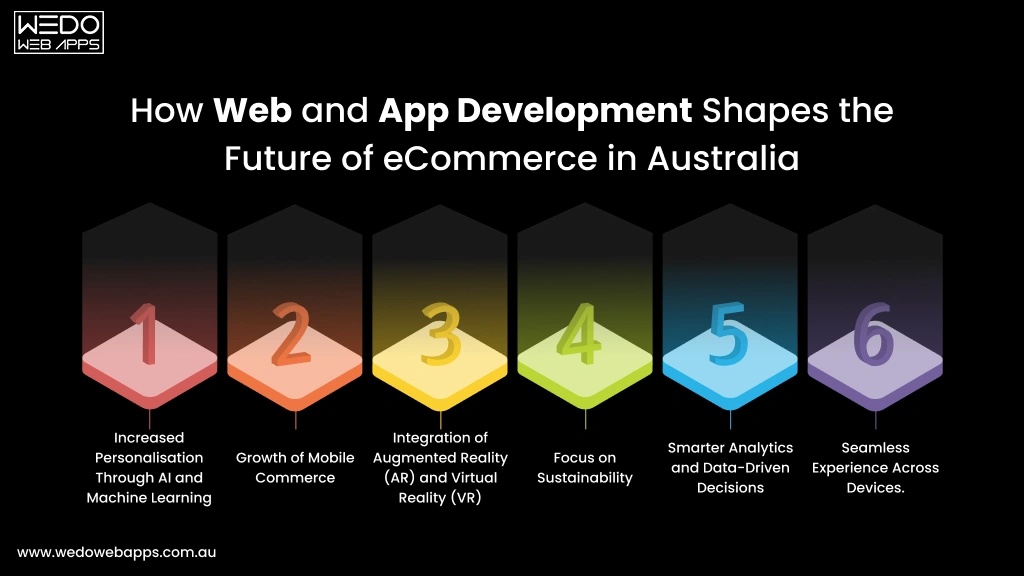
The future of eCommerce in Australia depends on the technology that improves shopping and business efficiency. Websites and apps are no longer an option, but they are now the essential tools to have growth and customer satisfaction.
The future of eCommerce will be:
Increased Personalisation Through AI and Machine Learning
- Apps and websites can track customer behavior to provide relevant product suggestions.
- Automated recommendations improve the conversions.
- Businesses can offer deals and promotions tailored to each shopper.
Growth of Mobile Commerce
- More Australians shop on smartphones than ever before.
- Mobile apps provide faster checkout, saved carts, and notifications.
- Businesses that ignore mobile apps can miss a large portion of the audience.
Integration of Augmented Reality (AR) and Virtual Reality (VR)
- Shoppers can try the product virtually before buying.
- Help with online decisions for items like furniture, fashion, or accessories.
- Increase confidence and reduce returns.
Focus on Sustainability
- More consumers now prefer eco-friendly products.
- Stores can highlight sustainable products in apps or websites.
- Transparent practices build trust and loyalty.
Smarter Analytics and Data-Driven Decisions
- Track which product sells best, how users navigate the store, and where drop-offs occur>
- Analytic guide improvement on design, feature, and marketing.
- Help Australian businesses stay competitive in a growing market.
Seamless Experience Across Devices.
- Customers expect the same whether on desktop or mobile.
- Responsive websites and well-designed apps provide continuity.
- Improves engagement, repeat purchases, and customer retention.

How to Choose the Right Agency for eCommerce Web and App Development in Australia
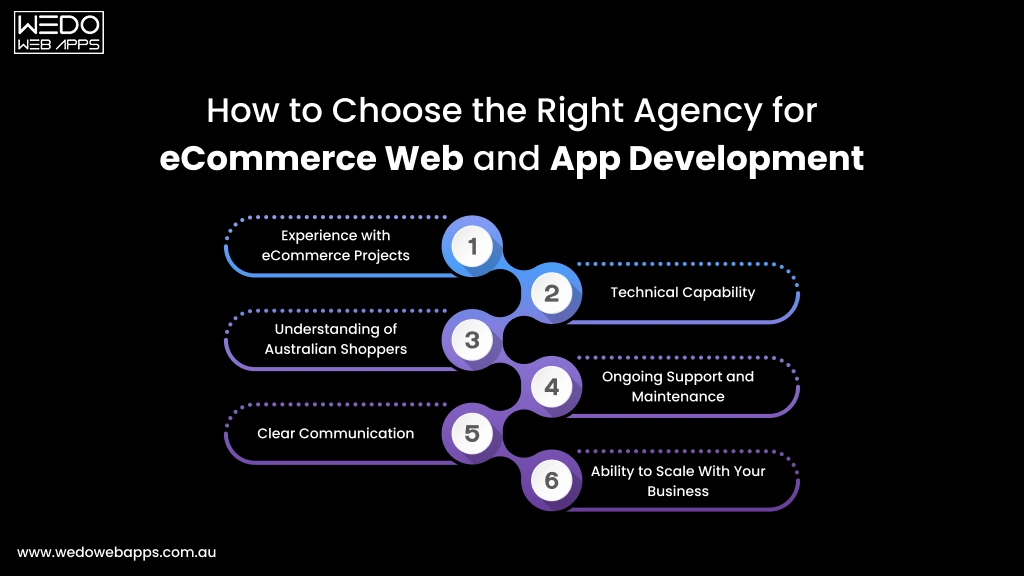
A reliable eCommerce development agency in Australia helps your eCommerce store perform well and stay stable as your business grows across Australia.
Choose an eCommerce company that:
Experience with eCommerce Projects
Agencies that already work with the online store understand product handling, checkout steps, and system links.
Key things to check include:
- Past eCommerce work
- Industry experience
- Quality of their work
Technical Capability
The agency should easily manage both web and mobile app development for smooth performance.
Important areas include:
- Shopify, WooCommerce, or custom builds
- iOS and Android app development
- Speed optimisation and feature support
Understanding of Australian Shoppers
Local buying habits vary across metro and regional areas.
A capable agency will consider:
- Trusted payment options such as Afterpay and PayPal.
- Fast loading for the mixed internet speed.
- Simple navigation for all buyers.
Ongoing Support and Maintenance
Your store needs regular checks to stay reliable.
Look for:
- Security updates
- Performance monitoring
- Quick handling of issues
Clear Communication
The project runs better when the updates are consistent and easy to follow.
You should receive:
- Defined timelines
- Regular progress notes
- Space for feedback
Ability to Scale With Your Business
Your store will require growth with the growth in the market.
Choose the agency that can handle:
- Larger catalogues
- High traffic
- New feature request
By considering these factors, you can easily hire app developer in Australia who can help you prepare the app for your customer’s business needs.
Final Thoughts and Next Steps
A strong website and mobile app help your eCommerce store to meet customer expectations and support steady growth across Australia. When your platform performs well, buyers stay longer, complete more orders, and return more often.
If you want a team that understands eCommerce, mobile shopping behavior, and local market needs, then our experts at WEDOWEBAPPS PTY LTD are ready to assist. We help businesses build fast websites, reliable mobile apps, and features that support real results.
If you are planning to upgrade your online store or launch a new one, our team can guide you through each step.
You can reach out today to discuss:
- Custom eCommerce app development.
- Web development for Shopify, WooCommerce, or custom builds.
- Feature planning and performance improvement.
- Support and maintenance for long-term stability.
Connect with our team and begin your eCommerce project with confidence.




















 Sharing Project Details
 Let's have a
call
Let's have a
call Got
Questions? Let’s Chat!
Got
Questions? Let’s Chat!